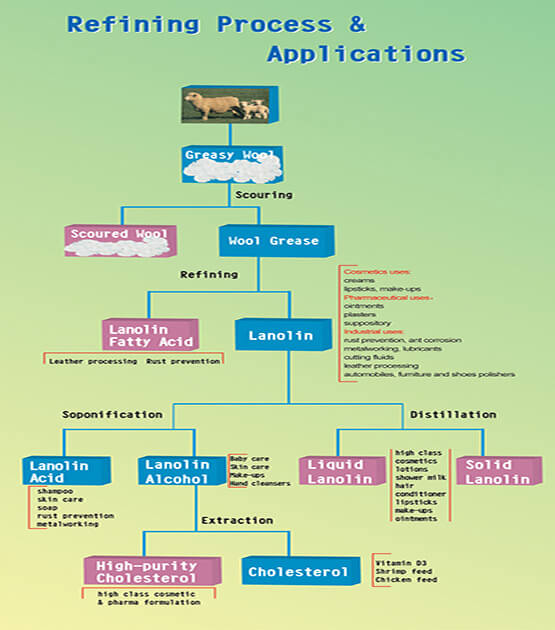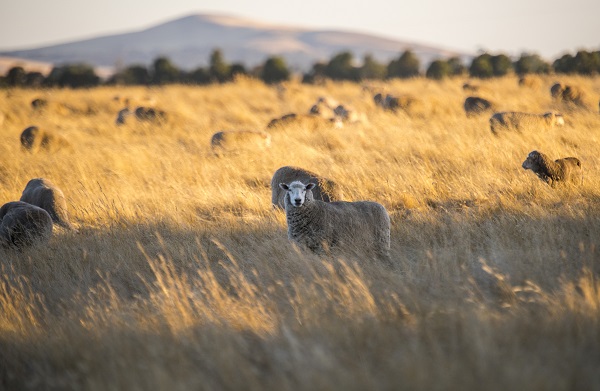
Wool grease is a natural substance secreted by the sebaceous glands in sheep's skin. These glands continuously secrete grease, forming a protective waxy layer on the surface of the wool fibers. This natural process gives sheep's skin and wool a natural barrier against long-term environmental damage. Through countless years of evolution, this complex mixture of thousands of lipid compounds has been carefully engineered, making it a remarkable example of natural "bioengineering."
Lanolin is extracted from the washing liquid used in large-scale wool processing. It is the basic raw material for subsequent refining to produce lanolin and various lanolin derivatives. These derivatives include:
lanolin alcohol
lanolin oil
ethoxylated lanolin
and various other inorganic materials.
These substances possess excellent emulsifying and emollient properties, making them highly sought-after moisturizing ingredients in cosmetics and pharmaceuticals. Furthermore, they have wide applications in various technological fields.
With years of experience and unwavering passion, we are committed to providing our clients with in-depth understanding of a wide range of lanolin products and their derivatives. Our direct and personalized communication with clients not only strengthens these relationships but also allows us to stay abreast of the latest industry research and global market trends.
Our highly integrated supply chain begins with wool grease, processes it into lanolin, and then further refines it into a range of byproducts suitable for technological applications, achieving the highest pharmaceutical quality.
Leveraging our deep business acumen, we are dedicated to providing highly professional and flexible services, with customer satisfaction as our top priority.
Through seasonal shearing, sheep shed their warm, thick wool—a process that does not harm the animals and ensures their well-being. Simply calling lanolin an "animal-derived" product is misleading, as it ignores the environmental advantages of this superior natural resource.
Given that lanolin is obtained through the wool industry and does not cause harm or death to animals, it is more accurately described as an "animal-harvested" natural product.