Catalyzing Industrial Transformation

Precision Manufacturing for Tomorrow's Solutions

Weaving the Fabric of Progress

Premium Chemical Manufacturing from Vision to Reality

Architects of Molecular Excellence

Crafting Advanced Solutions Through Innovative Manufacturing

Latest News

Classification and Properties of Vaseline

Classification of VaselineBased on its uses, petroleum jelly may be roughly classified into three categories: industrial, cosmetic, and medicinal.i. Medical VaselineBecause of its occlusive qualities, which form a barrier to protect the skin from moisture loss and promote healing, petroleum jelly is frequently utilized in the medical sector. It is frequently used to keep small wounds, burns, and abrasions wet and free of infection and aids in the healing process. The research “Clinical reliability and cost analysis of using petroleum jelly creams versus water-based gels for urethral catheterization” compares the cost and effectiveness of petroleum jelly with water-based gels for urethral catheterization, highlighting its application in a clinical environment. The study’s conclusion that petroleum jelly may be applied successfully in these kinds of treatments highlights the substance’s adaptability in medical settings.The treatment of heel fissures is another medical use, as evidenced by a research comparing the effects of petroleum jelly and coconut oil on young women’s heel fissures. The moisturizing qualities of petroleum jelly aid in the treatment of dry, cracked skin, a frequent podiatric ailment.ii. Cosmestic Vaseline:Cosmetic Vaseline’s moisturizing qualities are why it’s employed in the beauty and cosmetics industries. Hand creams, lip balms, and other skincare items frequently include it. It serves as a basis for cosmetic items and moisturizes dry lips and face, it’s occlusive properties assist to trap moisture, making it a useful treatment for dry skin. Despite the fact that petroleum jelly is usually regarded as safe for cosmetic usage, allergic responses can occasionally occur, as demonstrated by the instance of allergic contact cheilitis brought on by white petroleum jelly. This emphasizes the need of customers with sensitive skin or allergies exercising caution and awareness.iii. Industrial VaselinePetroleum jelly is also used in a variety of industrial contexts. It is employed in the production of several goods, including polishes and candles, as well as lubricants and rust-preventive coatings. The characterisation of petroleum waxes, which are closely linked to petroleum jelly, for application in the food industry as coatings and texture enhancers is covered in the paper “Rapid Classification of Petroleum Waxes: A Vis-NIR Spectroscopy and Machine Learning Approach”.Furthermore, the potential of petroleum jelly as a viscosity modifier and stabilizer in commercial formulations is demonstrated by the rheological properties of petroleum jelly formulations incorporating organically modified layered double hydroxides. This demonstrates how petroleum jelly may be used to improve the qualities of items in which it is integrated. Although industrial Vaseline is not meant for use in medicine or cosmetics, it has many of the same qualities.Properties of VaselineDetermining the quality and uses of petroleum jelly requires an understanding of its qualities. One of petroleum jelly’s most crucial characteristics is its color; its whiteness indicates its superior quality and thorough purification. The amount of heavy metals, sulfated ash, and polycyclic aromatic hydrocarbons (PAHs) in petroleum jelly also indicates its quality.Other physical characteristics that vary depending on the producer of petroleum jelly include its viscosity, density, and melting point. The congealing point and penetration are also included in the petroleum jelly specification table.The highest temperature at which petroleum jelly starts to semi-solidify from a liquid condition is known as the congealing point. Furthermore, petroleum jelly’s penetration shows how soft it is at room temperature. The chemical characteristics of petroleum jelly that control its volatility and reactivity are its flash point, acidity, and alkalinity, in that order. ReferenceCaniklioğlu, M., Öztekin, Ü., Sarı, S., Selmi, V., Gürtan, E., & Işıkay, L. (2021). Clinical reliability and cost analysis of using petroleum jelly creams versus water-based gels for urethral catheterization.K, S., Venkata Ramana, V., & Srinivasa Rao, R. (2023). ALLERGIC CONTACT CHEILITIS OF BOTH LIPS CAUSED BY WHITE PETROLEUM JELLY. GLOBAL JOURNAL FOR RESEARCH ANALYSIS.Barea-Sepúlveda M, Calle JLP, Ferreiro-González M, Palma M. Rapid Classification of Petroleum Waxes: A Vis-NIR Spectroscopy and Machine Learning Approach. Foods. 2023 Sep 7;12(18):3362. doi: 10.3390/foods12183362. PMID: 37761070; PMCID: PMC10528079.Mosangi, D., Pillai, S.K., Moyo, L., & Ray, S.S. (2018). RHEOLOGICAL CHARACTERISTICS OF PETROLEUM JELLY FORMULATIONS CONTAINING ORGANICALLY MODIFIED LAYERED DOUBLE HYDROXIDES.Petroleum Jelly or Vaseline: Everything You Need to Know; Available on: https://infinitygalaxy.org/what-is-petroleum-jelly-or-vaseline/

read more
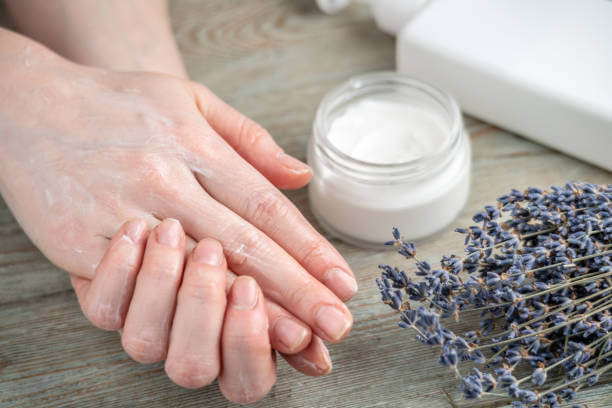
History and Composition of Lanolin

History of LanolinAncient civilizations such as the Greeks, Egyptians, and Romans were pioneers in utilizing lanolin for various purposes. These societies understood the importance of lanolin as a multipurpose material with both medical and beauty effects, according to historical documents.Lanolin was highly valued for its emollient qualities in ancient Greece, where it was frequently used into cosmetics products. Hippocrates and Galen were among the Greek doctors and academics who recorded the use of lanolin as a medicinal remedy for wounds and skin ailments.In a similar vein, lanolin was a component of ancient Egyptian beauty rituals and cosmetics. Archaeological discoveries and Egyptian hieroglyphs attest to the usage of lanolin in lotions, balms, and fragrances. It is reported that Cleopatra, who was well-known for her beauty routine, preferred skincare products with lanolin as an ingredient.Lanolin was essential to Europe’s growing textile industry in the Middle Ages. The medieval economy depended heavily on sheep husbandry and wool production, and lanolin extraction developed into a crucial step in the processing of wool.Lanolin, which was subsequently employed in textile finishing to soften and waterproof garments, was extracted from wool by means of processes devised by medieval European cultures for washing and refining wool. Wool that was rich in lanolin was also traded as a valued good, boosting the income and well-being of the wool-producing areas.The use of lanolin underwent a dramatic shift throughout the Industrial Revolution due to advances in manufacturing techniques and chemistry that increased its usage in a wider range of sectors. Lanolin discovered new use in cosmetics, industrial lubricants, and medicines with the rise of industrialization. Lanolin was a common component in pharmaceutical preparations in the 19th and 20th centuries, especially ointments and salves for skin conditions and wound healing. Its inherent emollient qualities make it a perfect foundation for topical drugs, securing its position in contemporary pharmacopoeias. Concurrently, the cosmetics industry adopted lanolin due to its benefits for moisturizing skin. Because of its superior moisturizing and protective properties, lanolin has emerged as a crucial component in skincare formulas, such as creams, lotions, and lip balms.The history of lanolin reflects its enduring legacy as a natural resource cherished for its therapeutic, cosmetic, and industrial applications. Human culture and trade are intricately linked to the history of lanolin, spanning from prehistoric times to contemporary communities. Future generations will be able to benefit from lanolin’s heritage as a useful and adaptable material as we continue to explore its possibilities via scientific research and innovation.Lanolin’s natural origin and many uses have made it valuable even in the current period. Lanolin has seen a comeback in favor as a desired ingredient in cosmetics and personal care products due to increased customer interest in natural and sustainable components. Furthermore, lanolin’s purity and efficacy have been improved by developments in lanolin extraction and processing methods, opening the door to the creation of premium lanolin-based formulations. The reduction of environmental effects related to lanolin production is another goal of initiatives to support sustainable methods in sheep husbandry and wool production.Composition of LanolinSterol esters, which are substances created when sterols (alcohol-based chemicals) combine with fatty acids, make up the majority of lanolin. A comprehensive chemical examination of lanolin demonstrates a diverse and abundant array of lipids, comprising:Cholesterol and its derivatives: Lanolin has a large amount of cholesterol, which helps to give it its emollient qualities. Lanolin extracts contain derivatives that have been found, including psi-cholesterol.Fat acids and fatty alcohols: These consist of long-chain acids and alcohols including oleic acid, palmitic acid, and pentadecenol. These elements are essential to lanolin’s moisturizing properties.Esters of wax: Alcohols and fatty acids are esterified to create these. They help lanolin retain its water-resistant qualities, which makes it a superior barrier cream.Alcohols derived from lanolin: complex alcohol combinations produced by lanolin esters being hydrolyzed. They improve the protecting and emollient qualities of lanolin-based products.References1 Clark EW. A brief history of lanolin. Pharm Hist (Lond). 1980 Dec;10(3):5-6. PMID: 11630744.2 Ew, C. (1980). A brief history of lanolin. Pharmaceutical historian, 10, 5-6.3 Grundy, D., Abraham, A., & Wilde, M.J. (2023). Investigating the Chemical Composition of Lanolin Waste to Improve the Production of Sustainable Natural Fibre Materials. ChromCom.

read more
Yellow Vaseline Uniqueness

Yellow Vaseline, also known as yellow petrolatum or yellow petroleum jelly, is a variation of petroleum jelly that has a yellow color. While the regular white petroleum jelly is widely known and used for its moisturizing and protective properties, the yellow variant has some unique characteristics and applications. Here are a few points that highlight the uniqueness of Yellow Vaseline:1. Color: The most apparent difference is the yellow color. This tint can be attributed to the inclusion of natural or artificial yellow dyes. The color distinction can be useful in specific applications or preferences where the yellow tint is desired or adds aesthetic value.2. Medicinal Uses: Yellow Vaseline is commonly used in some medicinal applications, such as wound healing and skin protection. Its occlusive nature helps create a barrier on the skin’s surface, preventing moisture loss and protecting the skin from external irritants. The yellow tint can make it easier to spot the application area on the skin.3. Cosmetics and Skincare: Yellow Vaseline is occasionally used in cosmetics and skincare products. The color can add an appealing visual aspect to certain formulations, making them stand out or providing a specific look. It is sometimes used in lip balms, ointments, and creams to offer moisturization and protection.4. Artistic and Creative Applications: The yellow color of this petroleum jelly variant opens up possibilities for artistic and creative applications. It can be used in crafts, DIY projects, or theatrical makeup to achieve desired effects, create textures, or enhance visual aesthetics.5. Personal Preferences: Some individuals simply prefer the yellow tint of petroleum jelly over the traditional white variant. Personal preferences and aesthetics can play a role in choosing Yellow Vaseline for various applications.While Yellow Vaseline has some unique characteristics, its core properties and benefits are similar to those of regular petroleum jelly. It is primarily used for its moisturizing, protective, and occlusive qualities, regardless of the color variation.

read more

Experiencesince 2000

Lanolin supplier – Sinochem Nanjing Corporation(Xinyi Lanolin Co.,Limited) with 100 employees and 10 technicians, we specialize in lanolin production. Company fixed assets have reached 4 millions yuan, the annual output of industrial lanolin is 1000 tons. We own advanced analytic and test equipment: the environment-friendly sewage treated apparatus and product glass fiber mesh fabrics fo grinding wheet. Our products are exported to S.Korea, Europe and Southeast Asia. ###Sinochem Nanjing Corporation(Xinyi Lanolin Co.,Limited) mainly specializes in the production and research of lanolin, including lanolin cosmetic grade, lanolin pharmaceutical grade, lanolin fatty acid, lanolin alcohol, lanolin BP, lanolin USP, cholesterol and vitamin D3, etc.

12h

After-Sales Response

99%

Delivery Rate

100%

Factory-Exit QC

99%

On-Time Delivery

The Catalyst Within